

Explore Biscayne National Park
Your Backyard National Park
Biscayne National Park is about 95% water, a park made for boats. It covers 172,971 acres just south of Miami, and only about 9,075 acres of that is land, spread over 42 islands.
Congress protected it as Biscayne National Monument on October 18, 1968, and it became Biscayne National Park on June 28, 1980.
The park protects four ecosystems in one trip:
-
Mangrove shoreline: a fringe of mangrove forest along the mainland
-
Biscayne Bay: the bay's clear, shallow southern waters
-
The northernmost Florida Keys: islands made from ancient coral reef
-
The coral reef: the northern end of Florida's Coral Reef, the third-largest coral reef in the world


Map of the Park
Tap any pin to learn about the islands, wrecks and reefs we can take you to.
History & Legends of the Bay

Adams Key: Where Presidents Came to Fish
Off the south end of Elliott Key, little Adams Key was once home to the Cocolobo Club, a private fishing retreat that Miami Beach developer Carl Fisher built around World War I. Its guest book read like a who's who: Presidents Warren Harding, Herbert Hoover, Lyndon Johnson and Richard Nixon all spent time here, as did Will Rogers, boxer Jack Dempsey and Harvey Firestone. The old lodge burned in 1974, and Hurricane Andrew took the last club buildings in 1992. Today it's a quiet park picnic spot with a pavilion, restrooms and a short trail through the hardwood forest, open 9 AM to sunset.
President Warren Harding and friends with a catch at the Cocolobo Club, Adams Key, early 1920s. Photo: Library of Congress
Caesar Creek and the Legend of Black Caesar
Caesar Creek is the swift channel between Adams and Elliott Keys and Old Rhodes Key, linking the bay to the ocean side. It has carried a pirate's name since at least 1774, when surveyor Bernard Romans mapped it as "Black Caesars Creek". Legend says Black Caesar, an African chief turned pirate, hid his ship here, tying it to an iron ring in the rocks and pulling it onto its side so the mast vanished behind the mangroves. Some versions make him one of Blackbeard's men. Historians have found no proof he existed, so enjoy it as Miami's favorite pirate story.

Artist's impression of Black Caesar. Illustration: National Park Service
Sands Key: A Hidden Lagoon With a 1,000-Year Story
Just south of Boca Chita, across Lewis Cut, lies Sands Key. Tucked into the island is "the Keyhole," a narrow mangrove channel that opens into a calm, hidden lagoon, popular with paddlers. The canal was already there when the park bought a third of the island in 1971; boaters say it was dug for a marina that was never built. Long before that, Native people of the Glades culture, ancestors of the Tequesta, lived here, leaving shell mounds and pottery dating from about A.D. 1000 to 1650. Boats can idle right into the hidden lagoon. It's one of Captain Pablo's favorite stops, but to protect those sites no one may go ashore.
Deering Estate: 10,000 Years on the Bay
This Miami-Dade County park sits on the mainland just north of the national park. In a sinkhole here, archaeologists found Ice Age mammoth, dire wolf and saber-toothed cat bones with some of South Florida's oldest human remains and tools, about 10,000 years old. A Tequesta burial mound still stands in the hammock. The Richmond Cottage (1896) dates from the pioneer town of Cutler, and in 1922 industrialist Charles Deering finished his Mediterranean-style Stone House. Hurricane Andrew's 16-foot surge wrecked the estate in 1992. It reopened in 1999 after a seven-year restoration. Open daily 10 AM–5 PM, arriving by land only.
A Quick History
-
10,000+ years ago: People's story here begins with Paleo-Indians, when the bay was dry land.
-
About 2,500 years ago onward: The Tequesta people lived off the bounty of the sea, leaving shell mounds that archaeologists still study.
-
1878: Fowey Rocks Lighthouse, the "Eye of Miami," was first lit. That same year the steamship Arratoon Apcar ran aground just a few hundred yards from the lighthouse construction site.
-
1891–1966: Ships kept meeting the reef: Erl King (1891), Alicia (1905), Lugano (1913) and the schooner Mandalay (1966). Today they're stops on the park's Maritime Heritage Trail.
-
1930s: "Crawfish Eddie" Walker built the first shack on stilts in the bay, the start of Stiltsville. At its 1960 peak there were 27 buildings.
-
Late 1930s: Industrialist Mark Honeywell, who bought Boca Chita Key in 1937, built its 65-foot ornamental lighthouse and harbor.
-
1961: Landowners voted to create the City of Islandia, with plans for roads, hotels and a seaport. Local doctors, pilots, farmers and writers fought back to save the bay.
-
1968: Developers bulldozed a six-lane "spite highway" down Elliott Key, but the park won. Biscayne National Monument was signed into law on October 18.
-
The Jones family: For nearly a century the Jones family lived on Porgy Key and nearby islands. Lancelot Jones, a lifelong bay protector, was the first Islandia landowner to sell his land to the National Park Service. October 13 is Lancelot Jones Day in Florida.
-
1980: The monument became Biscayne National Park.
-
1992: Hurricane Andrew left only seven Stiltsville buildings standing.
Fun Facts
-
The park is about 95% water.
-
More than 500 kinds of reef fish live in the park.
-
44 shipwrecks have been documented in park waters.
-
The Maritime Heritage Trail is the only underwater archaeological trail in the National Park System.
-
Boca Chita Key's 65-foot lighthouse is ornamental. It was built for looks, not navigation.
-
Boca Chita is the most visited island in the park.
-
The park protects part of the third-largest coral reef in the world.
-
The park has one of Florida's largest populations of mangrove cuckoos, a famously hard bird to spot.
-
Elliott Key's hiking trail follows the old 1968 "spite highway," now grown into a tunnel of tropical forest.
-
Even the right whale and humpback whale are on the park's documented species list. They're rare, but they've been seen here.
What You'll See, Season by Season
Monthly sightings data was too thin to source month by month, so this is grouped by season. Wildlife sightings are never guaranteed.
All year
-
Bottlenose dolphins and West Indian manatees: both live in park waters. Manatees like the bay's quiet waters.
-
Wading birds: snowy egrets, great and little blue herons, great egrets and white ibis feed along the mangroves. At dawn and dusk, hundreds of ibis fly to and from their island roosts.
-
Brown pelicans: look for them on the old pilings off Boca Chita and flying in lines along Elliott Key.
-
Magnificent frigatebirds: they live in South Florida year-round. Watch for them soaring over the offshore lighthouses.
-
Ospreys: they nest in the park.
-
Monarch butterflies: South Florida has monarchs that live and breed here all year, plus migrants from the north.
-
Reef fish: 500+ species, from queen angelfish to parrotfish.
-
Mosquitoes: they're around all year on the islands, so bring repellent. Summers are hot and humid with afternoon thunderstorms.
Winter (dry season)
-
Roseate spoonbills: they nest in the park during the dry season.
-
Shorebirds, terns and cormorants: numbers peak in winter on the jetties and rocks.
Spring
-
Warblers: northbound migrant warblers stop on Elliott Key. Rare Caribbean visitors sometimes show up too.
-
Sea turtles: nesting season in this part of Florida starts March 1. Loggerheads make almost all the nests on the park's beaches.
Summer (wet season)
-
Sea turtle nesting peaks from May through the end of summer.
-
White ibis nest in the wet season.
-
Lobster mini-season: the two-day sport season is the last Wednesday and Thursday of July (July 29–30 in 2026). In Biscayne National Park the limit is 6 per person per day.
-
Hurricane season runs June 1 to November 30.
Late summer and fall
-
Lobster season opens August 6 and runs through March 31.
-
Coral spawning: most Florida corals spawn after the full moon in August or September.
-
Fall migration: southbound warblers pass through on their way across the bay.
-
Sea turtle nesting season ends October 31, when most eggs have hatched.

Snowy egret at Boca Chita Key. Photo by Captain Pablo.

Barred owl at Boca Chita Key. Photo by Captain Pablo. (Barred owls are on the park's bird list.)
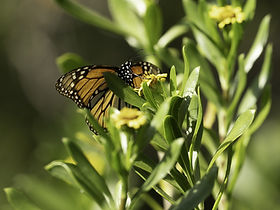
Monarch butterfly at Boca Chita Key. Photo by Captain Pablo.
Be a Good Guest: Wildlife & Reef Tips
-
Dolphins: stay at least 50 yards away (half a football field). Never feed, chase or swim after them.
-
Manatees: look, but don't touch. Never feed manatees or give them water. Don't chase them, and never separate a mother and calf. Harassing manatees is against state and federal law.
-
Bird colonies: give nesting birds at least 300 feet, and keep quiet.
-
No feeding any wildlife. It changes their natural behavior.
-
Choose mineral sunscreen without chemical UV filters like oxybenzone, or wear a sun shirt. Some sunscreen chemicals can harm coral.
-
Don't touch the coral. Coral polyps are damaged by the slightest touch, so watch your feet and fins.
-
Pack out all trash. The islands have no trash service.
Come See It With Us
Ready to see Biscayne's islands, reefs and wildlife up close? Every Coastal Runners trip is private and planned around what you'd love to do.
Book your trip today. Email hello@coastalrunners.com or call, text or WhatsApp 305-842-1119.